Too many safety meetings feel like a checklist chore. Workers zone out. Supervisors rush through slides. Nothing sticks. The real problem? Poor delivery and lack of structure—not the content itself. That’s where tool box talks printable resources come in.
Printable toolbox talks transform abstract safety concepts into focused, five- to ten-minute discussions grounded in real-world risks. They’re visual, concise, and designed for on-the-spot use—no projector, no Wi-Fi, just a sheet of paper and a crew ready to listen.
When done right, printables improve retention, support compliance, and create a culture where safety isn’t mandated—it’s modeled.
What Are Printable Toolbox Talks (And Why They Work)
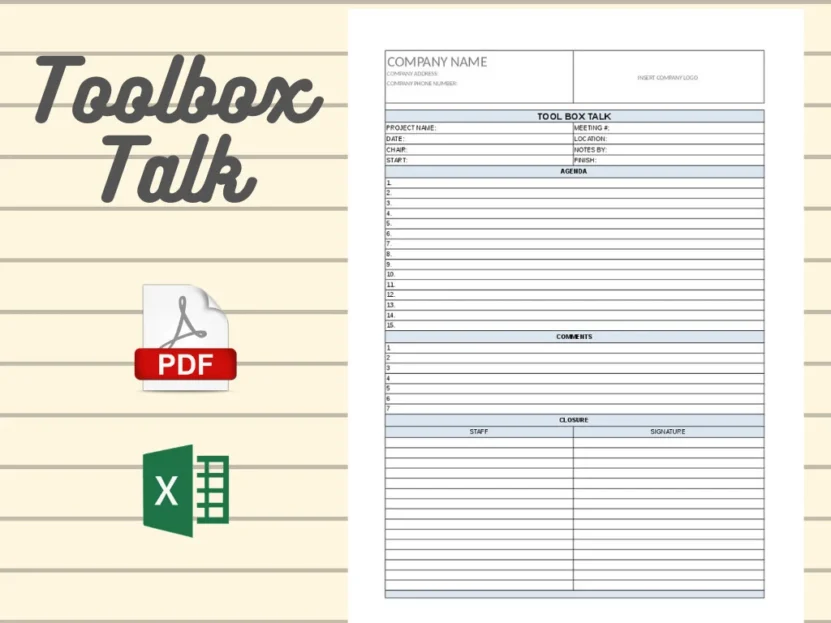
Printable toolbox talks are one-page safety briefs designed to guide short, frequent safety discussions at job sites, warehouses, or industrial environments. Typically formatted as PDFs or downloadable documents, they include:
- A focused safety topic (e.g., ladder safety, heat stress, PPE)
- Key discussion points
- Real-world hazard examples
- Questions to prompt team engagement
- Sign-off section for attendance tracking
Their strength lies in simplicity. Unlike lengthy training modules, printables distill complex OSHA standards into actionable conversations. A foreman can pull one from a binder before a morning crew huddle and lead a meaningful talk in under 10 minutes.
Real-World Use Case A roofing crew gathers at 6:30 a.m. The site supervisor prints a “Working at Heights” toolbox talk the night before. He reviews fall protection gear, points to nearby guardrails, and asks: “Who saw a harness last week that looked frayed?” One worker raises his hand. The issue gets logged. A near-miss is avoided.
Without the printable, the conversation might never have happened.
Key Features of an Effective Printable
Not all printables are created equal. Many free templates online are too generic or overloaded with text. Look for these traits:
✅ Single-topic focus – One hazard per sheet ✅ Visual cues – Icons, diagrams, or photos showing proper vs. unsafe behavior ✅ Discussion prompts – Open-ended questions like “What would you do if…?” ✅ Actionable takeaways – Clear “Do This / Not That” guidance ✅ Compliance-ready – Includes space for date, location, names, and signatures
Avoid templates that read like legal disclaimers or try to cover five topics at once. Clarity beats comprehensiveness in field safety talks.
Where to Find High-Quality Printable Toolbox Talks
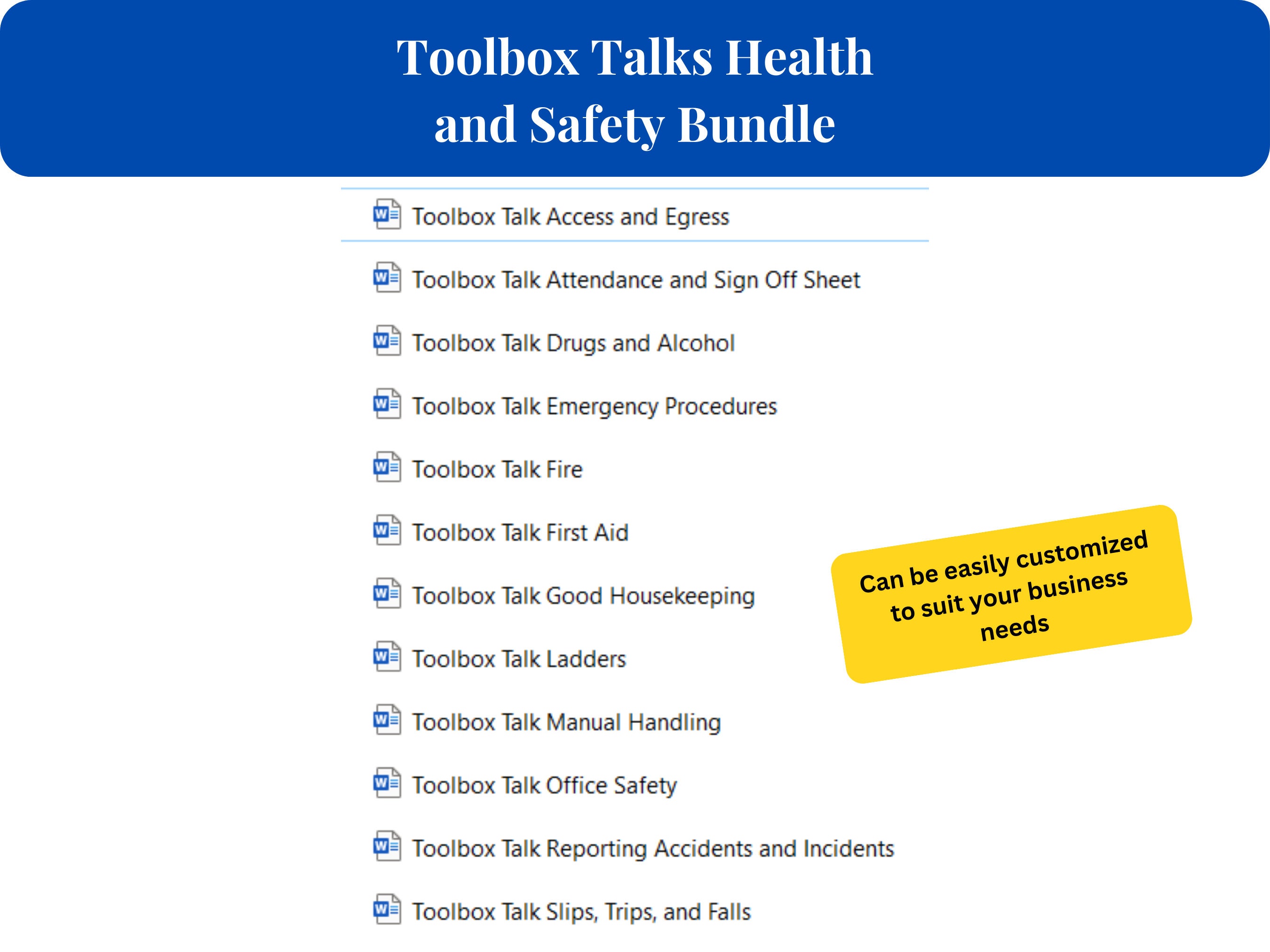
The internet is flooded with free and paid safety resources. But quality varies. Below are five trusted sources offering professional-grade, printable toolbox talks—many fully customizable:
| Resource | Topics Covered | Format | Cost | Customizable? |
|---|---|---|---|---|
| SafetyNow | 100+ topics (electrical, forklifts, confined space) | PDF, editable Word | Free sample packs; full access via subscription | Yes |
| Creative Safety Supply | PPE, ergonomics, fire safety | PDF with visuals | Free downloads (email signup) | No |
| OSHA.gov | Fall protection, hazard communication | Fact sheets & guides | Free | Limited |
| SafetyMatters (by Builders Mutual) | Construction-specific risks | PDF + tracking logs | Free | No |
| WorkSafeNB (Canada) | Seasonal hazards, mental health | Bilingual PDFs | Free | No |
Pro tip: Pair OSHA’s technical guidance with visual templates from SafetyNow or Creative Safety Supply. OSHA gives you regulatory accuracy; third-party printables make it engaging.
How to Use Printables for Maximum Impact
A printable is only as good as how it’s used. Follow this workflow to turn paper into behavioral change:
1. Schedule Weekly (or Daily) Talks Integrate talks into your routine. Monday mornings, post-shift changes, or before high-risk tasks work best.
2. Prep the Site-Specific Context Don’t read the sheet like a script. Adapt it. > Example: The printable mentions “slip hazards.” Point to the muddy patch near the equipment bay and say: “This is what that looks like here.”
3. Engage, Don’t Lecture Ask questions. Get workers to describe risks in their own words. > “Have you ever seen someone cut corners on lockout/tagout? What happened?”
4. Document Attendance Use the sign-in section. Not for punishment—proof of training matters during OSHA audits.
5. File and Review Monthly Store completed sheets in a binder. Review trends: - Are fall protection talks recurring because issues persist? - Is PPE compliance dropping in summer months?
Data from printables can inform deeper training needs.
Common Mistakes That Undermine Printable Talks
Even great tools fail with poor execution. Avoid these pitfalls:
🚫 Using the same talk every week Repetition kills engagement. Rotate topics based on season, project phase, or incident trends.
🚫 Skipping discussion for quick sign-offs Signing sheets without talking defeats the purpose. OSHA fines companies that “fake” safety meetings.
🚫 Ignoring worker input Printables aren’t monologues. If a laborer suggests a better way to store tools, listen. That’s safety ownership.
🚫 Not storing records properly Digital scans or physical binders should be kept for at least one year. Lost documentation = failed compliance.
Customizing Templates for Your Team
Generic templates work, but tailored ones stick better. Here’s how to customize:
- Add site photos – Replace stock images with real shots of your job site
- Insert crew names – “Remember when Javier tripped near Bay 3?” makes it personal
- Localize hazards – Coastal teams need hurricane prep talks; desert crews need heat illness guides
- Brand with company logo – Reinforces that safety is part of your culture
Workflow tip: Assign a safety officer to update the master template library quarterly. Archive outdated versions—no one should use a 2-year-old fall protection guide.
Printable vs. Digital: Which Works Better?
The debate isn’t about tech—it’s about context.
| Factor | Printables | Digital Apps |
|---|---|---|
| No Wi-Fi needed | ✔️ | ❌ |
| Ease of use (non-tech crews) | ✔️ | ❌ |
| Tracking & reporting | Manual | Automatic |
| Real-time updates | Delayed | Instant |
| Engagement tools (polls, quizzes) | Limited | High |
Verdict: For field crews, printables win. They’re reliable, distraction-free, and don’t require devices. Save digital tools for office-based tracking. Use print for delivery, digital for data.
Make Safety Conversations Stick
Toolbox talks aren’t about compliance box-ticking. They’re about changing behavior—one conversation at a time.
Printable toolbox talks are the simplest, most scalable way to do it. They turn abstract rules into real talk. They make safety visible, discussable, and repeatable.
Download a template today. Tailor it to your crew. Use it in the field. Don’t just hand it out—facilitate, question, and follow up.
Because the best safety culture isn’t built in boardrooms. It’s built in the huddle, on the ground, one printed sheet at a time.
Frequently Asked Questions
Where can I download free printable toolbox talks? Reputable sources include OSHA.gov, Creative Safety Supply, and SafetyMatters by Builders Mutual. Always verify content aligns with current regulations.
Can I edit printable toolbox talks? Yes—many providers offer editable versions in Word or PDF form. Customize them to reflect site-specific risks and procedures.
How often should we conduct toolbox talks? Weekly is ideal. High-risk environments may require daily talks, especially before non-routine tasks.
Do I need to sign off on each session? Yes. Documenting attendance proves training occurred and supports compliance during audits.
Are printable talks OSHA-compliant? The talks themselves aren’t “certified,” but using accurate, up-to-date content and maintaining records meets OSHA’s training documentation expectations.
What topics should I cover first? Prioritize high-risk areas: fall protection, PPE, electrical safety, lockout/tagout, and hazard communication.
Can these be used in non-construction industries? Absolutely. Printables work in manufacturing, logistics, facilities maintenance, and any environment with physical hazards.
FAQ
What should you look for in Free Toolbox Talks Printables for Safer Workplaces? Focus on relevance, practical value, and how well the solution matches real user intent.
Is Free Toolbox Talks Printables for Safer Workplaces suitable for beginners? That depends on the workflow, but a clear step-by-step approach usually makes it easier to start.
How do you compare options around Free Toolbox Talks Printables for Safer Workplaces? Compare features, trust signals, limitations, pricing, and ease of implementation.
What mistakes should you avoid? Avoid generic choices, weak validation, and decisions based only on marketing claims.
What is the next best step? Shortlist the most relevant options, validate them quickly, and refine from real-world results.



:max_bytes(150000):strip_icc()/GettyImages-21696356521-4fbe8ad077b44dd89725c2f789cb6716.jpg)
